

- Your cart is empty
- Continue Shopping
Earwax Removal Manchester | Pharmacy Treatment Guide
- Baby & Child
- Posted on
-
by Faraz
- 0 comments
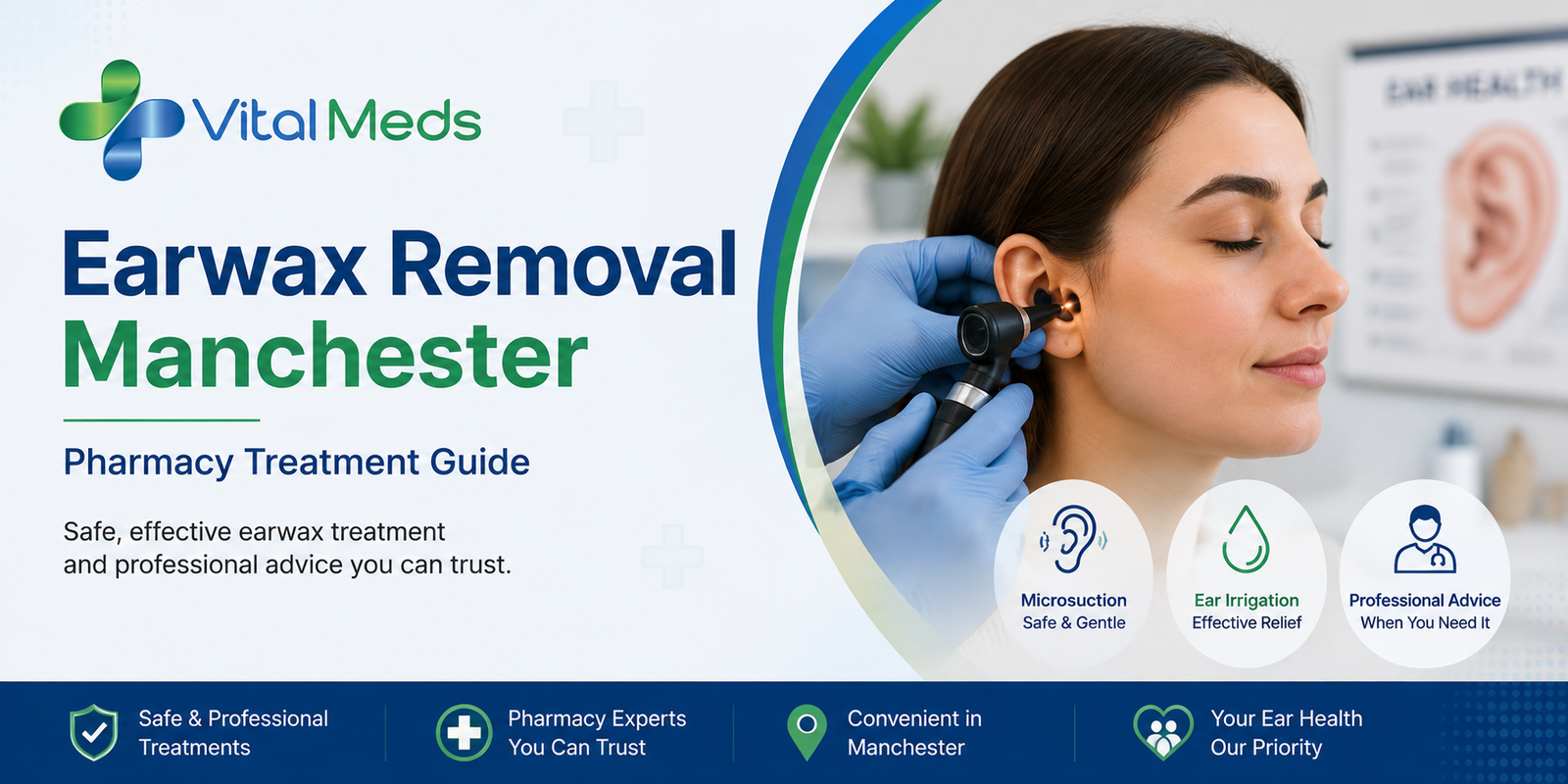
Earwax is a normal substance that protects the ear canal. In most people, it naturally works its way out of the ear without needing to be removed. However, when wax builds up and causes symptoms such as hearing difficulty, discomfort or tinnitus, treatment may sometimes be appropriate.
This guide explains common earwax removal options, when professional treatment may be considered, what microsuction involves and what to know before choosing a private earwax removal service.
What Is Earwax?
Earwax, also known as cerumen, is naturally produced inside the ear canal.
It helps protect and lubricate the delicate skin inside your ears and can trap dust, bacteria and other particles.
Usually, earwax gradually moves towards the outside of the ear and does not need to be removed manually.
Problems can occur when wax accumulates and becomes impacted.
Symptoms of earwax build-up can include:
- A blocked feeling in the ear
- Reduced hearing
- Ear discomfort
- Itching
- Tinnitus
- Dizziness in some cases
These symptoms can have other causes, so persistent or unusual symptoms should be assessed by an appropriate healthcare professional.
When Does Earwax Need to Be Removed?
Not every build-up of earwax requires professional removal.
Clinical guidance generally recommends starting with appropriate self-management where suitable. Earwax removal may be considered when the build-up is causing significant symptoms, such as hearing loss or pain, or when the ear needs to be cleared for a clinical examination or other healthcare reason.
If your ear is blocked but you are otherwise well, a pharmacist can advise you about suitable ear drops or other options.
If symptoms continue, become severe or you are unsure whether earwax is responsible, seek medical advice.
How Can Earwax Be Removed?
There are several approaches to managing earwax, depending on the individual and the reason for removal.
1. Earwax Softening Drops
Ear drops can help soften hard or impacted wax so that it can move out of the ear naturally.
Depending on your circumstances, a pharmacist or healthcare professional may recommend a suitable earwax-softening product.
Some NHS guidance recommends olive oil or other appropriate ear drops as an initial approach for uncomplicated earwax build-up.
However, ear drops are not suitable for everyone. For example, some guidance advises against using them when there is a known perforated eardrum.
If you have a history of ear problems, ask a pharmacist or healthcare professional before using ear drops.
2. Ear Irrigation
Ear irrigation involves using water to help remove earwax from the ear canal.
It may be appropriate for some people, but it is not suitable in every situation.
For example, clinical guidance identifies conditions such as an eardrum perforation, certain ear infections and previous ear surgery as reasons why irrigation may not be appropriate.
A healthcare professional should determine whether this method is suitable.
3. Microsuction
Microsuction uses a small suction probe to remove earwax while the ear canal is viewed under magnification.
The clinician can see the wax while removing it, allowing the procedure to be performed under direct vision.
Microsuction is commonly used when earwax needs professional removal and may be considered when other approaches have not been suitable or successful.
What Happens During Microsuction?
If you attend a microsuction appointment, the healthcare professional will normally examine your ear first.
An otoscope or microscope can be used to assess the ear canal and identify the wax.
During the procedure, a small suction probe is carefully positioned inside the ear canal to remove the wax.
The procedure itself is generally relatively quick. UCLH states that the suction procedure commonly takes around 15–20 minutes for both ears, although the time can vary depending on the individual.
You may hear a loud suction noise during the procedure. Some people may also experience temporary discomfort or dizziness.
If you feel uncomfortable during treatment, tell the clinician so they can stop or reassess the procedure.
Is Microsuction Safe?
Microsuction is generally considered a suitable method of earwax removal when performed by a trained clinician using appropriate equipment.
However, like any procedure, it can have potential side effects.
These can include:
- Temporary discomfort
- Loud noise during the procedure
- Temporary dizziness
- Irritation of the ear canal
- Minor trauma
- Rarely, infection
- Temporary changes in hearing or tinnitus
UCLH notes that these risks are uncommon, but patients should be informed about them before treatment.
Professional assessment is particularly important if you have previous ear surgery, an eardrum perforation, recent ear infection or other ear problems.
What Should You Do Before Earwax Removal?
If you have booked professional earwax removal, you may be advised to soften the wax beforehand.
The preparation required can vary depending on the service and your individual circumstances.
Some NHS patient guidance recommends using appropriate ear drops or olive oil before microsuction to help soften the wax.
However, do not put drops into an ear if you have been advised not to use them or if you have a known eardrum perforation.
Always follow the instructions provided by your healthcare professional or the clinic carrying out the procedure.
What Should You Avoid When You Have Earwax?
One of the most important things to avoid is putting objects into the ear canal.
This includes:
- Cotton buds
- Hair pins
- Pens
- Fingers
- Other household objects
Using cotton buds can push wax deeper into the ear and may injure the ear canal or eardrum. NHS guidance specifically advises against inserting objects into the ear to remove wax.
Ear candles and similar unproven devices should also be avoided. NHS guidance states that there is no evidence that ear candles or ear vacuums effectively remove earwax.
Can Earwax Cause Hearing Loss?
Yes. A significant build-up of earwax can block the ear canal and cause temporary conductive hearing loss.
People may notice that sounds seem quieter or that one ear feels more blocked than the other.
However, hearing loss can have many different causes. If your hearing changes suddenly or significantly, do not assume that earwax is responsible.
A healthcare professional should assess persistent or significant hearing problems.
Can Earwax Cause Tinnitus?
Earwax build-up can sometimes be associated with tinnitus, particularly when the wax is blocking the ear canal.
Tinnitus describes sounds such as ringing, buzzing or humming that are heard without an external source.
If tinnitus continues after wax has been removed, or if it occurs alongside other concerning symptoms, further medical assessment may be appropriate.
When Should You Seek Medical Advice?
You should consider speaking to a healthcare professional if you have:
- Significant or persistent hearing loss
- Ear pain
- Ear discharge
- Blood coming from the ear
- Persistent dizziness
- Symptoms of an ear infection
- Severe or worsening symptoms
- A history of eardrum perforation
- Previous ear surgery
These symptoms may indicate a condition other than simple earwax build-up and may require medical assessment.
If you are unsure whether your symptoms are caused by earwax, speak with a pharmacist, GP or appropriate healthcare professional rather than attempting to remove the wax yourself.
Where Can You Get Earwax Removal Near Manchester?
If you are searching for earwax removal in Manchester, check whether the provider actually offers the service at a Manchester location before booking.
VitalMeds currently lists earwax removal among its clinical services, but its website specifically states that the earwax removal service is available at its Liverpool clinic.
This distinction is important because healthcare services and locations can change.
If you are based in Manchester and want to use VitalMeds for earwax removal, contact the pharmacy to confirm the current location, availability and booking arrangements before travelling.
Why Choose Professional Earwax Removal?
Professional earwax removal can be preferable to attempting to remove impacted wax with household objects or unproven products.
A trained healthcare professional can:
- Assess your symptoms
- Examine the ear
- Determine whether wax is present
- Consider whether removal is appropriate
- Choose a suitable removal method
- Identify situations requiring further medical assessment
This can help reduce the risk associated with inappropriate ear-cleaning methods.
Earwax Removal: Pharmacy Advice vs Professional Treatment
A pharmacy can be a useful first point of contact when you have uncomplicated earwax build-up.
A pharmacist may advise you about suitable ear drops and explain when you should seek further assessment.
Professional removal may be considered when wax remains impacted, symptoms persist or removal is clinically appropriate.
The right option depends on your individual circumstances.
Get the Right Advice for Earwax Build-Up
Earwax is a normal part of ear health and usually does not need routine removal. When wax becomes impacted and causes symptoms, appropriate treatment can help restore comfort and hearing.
If you are looking for earwax removal in Manchester, start by checking whether the provider offers the service locally and whether the treatment is appropriate for your symptoms.
VitalMeds provides pharmacy and healthcare services for patients across Manchester and Liverpool. Its current website lists earwax removal at its Liverpool clinic, so contact the team to confirm the latest service availability before making an appointment.
Need advice about earwax or another pharmacy service? Contact VitalMeds to discuss the appropriate next step for your healthcare needs.

