

- Your cart is empty
- Continue Shopping
Difference Between UTI and Bladder Infection Explained
- URINARY TRACT INFECTIONS (UTI)
- Posted on
-
by Faraz
- 0 comments
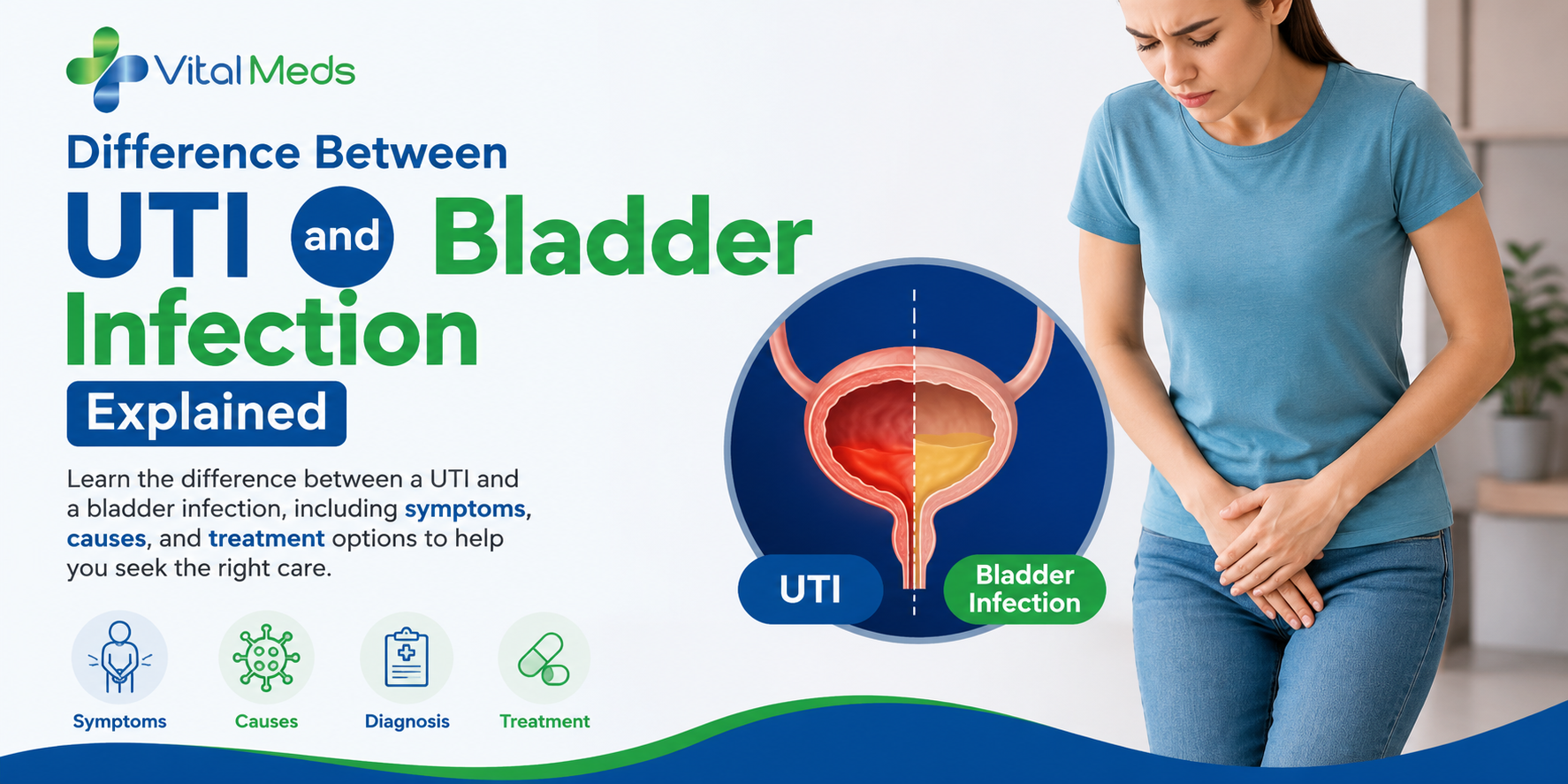
Many people believe they have a urinary tract infection (UTI) when they notice pain during urination, frequent urination and lower abdominal pain. But another word which is often used in place of that is “bladder infection. These conditions are very similar but not identical.
It can help you identify the signs of a UTI and bladder infection in time for timely treatment to prevent complications.
What Is a Urinary Tract Infection (UTI)?
Urinary tract infection (UTI) occurs when anything in the urinary system becomes infected. This includes:
- Kidneys
- Ureters
- Bladder
- Urethra
The majority of UTI cases are related to the bacteria gaining entry into the urinary system through the urethra and multiplying there. UTIs tend to be more common in women because they have a shorter urethra, but men are also at risk.
UTIs can be either a mild infection in the lower urinary tract or a more serious infection in the kidneys.
What Is a Bladder Infection?
A bladder infection is a particular form of urinary tract infection which is occurring in the bladder. Sometimes it is called cystitis.
In simple terms:
- All bladder infections are UTIs.
- Not all UTI’s are bladder infections.
Since the bladder is a part of the urinary system, an infection in the bladder is considered a urinary tract infection (UTI).
A bladder infection is one of the most frequently diagnosed forms of UTI, and is generally more treatable if caught early.
UTI vs Bladder Infection: The Main Difference
The main difference is where the infection occurs.
| Feature | UTI | Bladder Infection |
| Definition | Infection anywhere in the urinary tract | Infection specifically in the bladder |
| Affected Areas | Kidneys, ureters, bladder, or urethra | Bladder only |
| Severity | Can range from mild to serious | Usually limited to the bladder |
| Risk of Complications | Higher if infection reaches kidneys | Lower when treated promptly |
| Treatment | Depends on infection location | Usually straightforward antibiotic treatment |
Bladder infections are called a lower urinary tract infection and upper UTIs can involve both upper and lower urinary tract structures.
Common Symptoms of a Bladder Infection
Those who have a bladder infection are likely to have:
When a person has a burning sensation when they urinate.
- Urge to urinate, often.
- Having to urinate urgently or in a rush.
- Passing small amounts of urine
- Lower abdominal discomfort
- Cloudy urine
- Strong-smelling urine
These symptoms can progress rapidly and further complications usually occur when treatment is delayed.
Common Symptoms of a UTI
UTIs can occur in any portion of the urinary tract, leading to different symptoms.
Signs and symptoms of UTIs include:
- Pain when urinating
- Increased urinary frequency
- Urinary urgency
- Pelvic discomfort
- Blood in the urine
- Fever
- Chills
- Back or side pain
- Nausea and vomiting
If symptoms like fever, chills or back pain are present, it may mean that the infection has progressed beyond the bladder and presents a medical emergency.
What Causes UTIs and Bladder Infections?
This is usually due to bacterial infection, usually from a common bacteria in the digestive system called Escherichia coli (E. coli).
The risk can be enhanced by the presence of:
- Sexual activity
- Pregnancy
- Menopause
- Dehydration
- Retention of urine for extended periods of time
- Urinary tract abnormalities
- Kidney stones
- Weakened immune system
Knowing these risk factors may help minimize the risk of getting a second infection.
When Should You Seek Treatment?
Many people postpone treatment, thinking that the symptoms will go away. Infections that go untreated can become more severe, however, and may also become an infection of the kidneys.
If you have symptoms, including but not limited to:
- Painful urination
- Frequent urination
- Persistent urinary symptoms
- Blood in your urine
- Fever or chills
Abdominal or back pain that is so bad that it interferes with regular activities.
Early evaluation may be useful in determining the source of your symptoms and help to make sure that you are getting the right treatment.
How Are UTIs and Bladder Infections Treated?
Treatment is based on severity and location of infection.
Prescribed by healthcare professionals:
- Antibiotics if clinically indicated
- Increased fluid intake
- Symptom management advice
- Proceed to investigate further for recurrent infections
If the symptoms of the uncomplicated bladder infection are caught early, the infection can usually be treated successfully.
Preventing Future Infections
Although there is no guarantee that you will not get infected, some behaviours can help minimize your risk:
- Drink lots of water, all day long
- Avoid delaying urination
- Maintain good personal hygiene
- Empty bladder immediately following sex.
When travelling and when having a hectic day, drink plenty of water.
See your doctor if symptoms come back.
Preventive measures can help maintain urinary tract health and reduce the risk of future infections.
Conclusion
Although the terms UTI and bladder infection are often used interchangeably, they are not exactly the same. A UTI can occur in any part of the urinary system, and a bladder infection is one specific type of UTI that affects the bladder.
Knowing the differences between these conditions can help you understand your symptoms, get treated sooner and avoid complications. When you’re needing medical advice and treatment for a UTI, it’s best to get it early to maintain your health and get better sooner.
Looking for relief from UTI symptoms? To find out more about our UTI Treatment in Manchester service, and to book a confidential consultation with our healthcare team, please get in touch today.

