

- Your cart is empty
- Continue Shopping
Antihistamines: Loratadine, Cetirizine & Non-Drowsy Options
- PHARMACY FIRST
- Posted on
-
by Gulfam
- 0 comments
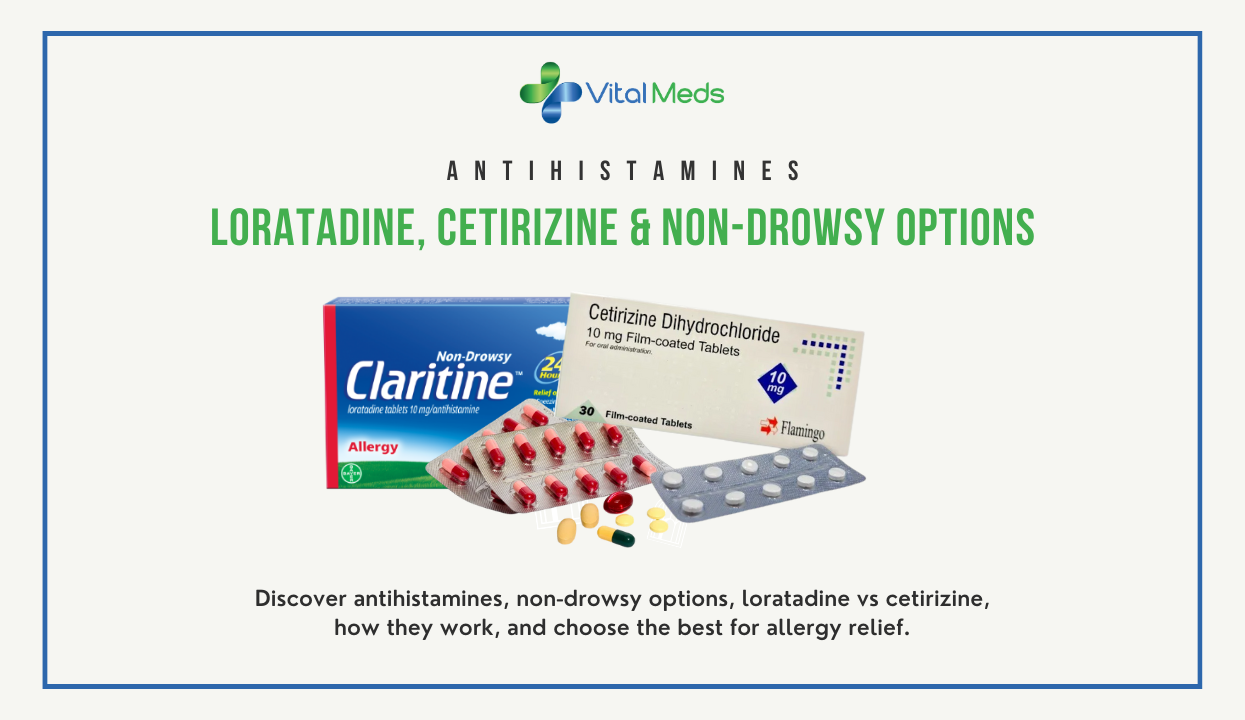
Among the most popular medications that are used to relieve the effects of allergy, antihistamines can be found. It may be hay fever, hives, or other allergic reactions. Knowing how antihistamines act, what types of antihistamines are available, and how they act can help in making the most appropriate decision with respect to your health. This paper will discuss all the non-drowsy solutions down to the comparison of loratadine vs cetirizine as well as commonly asked questions regarding these drugs.
What Are Antihistamines?
Antihistamines are medicine that prevents the effect of histamine, which is a chemical that is posted by your immune system as your body has an allergic reaction. Histamine has the effects of sneezing, itching, watery eyes, runny nose and hives. Antihistamines relieve such uncomfortable symptoms by preventing histamine.
Antihistamines are available in varying doses in forms such as tablets, capsules, liquids, nasal sprays, and eye drops. They are easily found as over the counter PPI medicines in drugstores such as VitalMeds in Liverpool, UK.
Types of Antihistamines
Antihistamines are of two general types:
1. First-Generation Antihistamines
These are antihistamines that are older and have the ability to make one feel sleepy. Widespread antihistamine agents of the first generation are diphenhydramine and chlorpheniramine. They are efficient and might not be applicable during the day because they are sedative.
2. Second-Generation Antihistamines
Antihistamines like loratadine and cetirizine are second-generation and do not make one feel drowsy and can be taken during the day. They are practical to use in an everyday activity as they do not result in intense sleepiness and thus can effectively alleviate allergies.
Non-Drowsy Antihistamines
Drowsiness is one of the primary issues of most people using antihistamines. Antihistamines that do not cause drowsiness are created to ease the symptoms of allergies without causing the individual to get sleepy.
Common non-drowsy antihistamines are:
- Loratadine
- Cetirizine
- Fexofenadine
These drugs are best suited to individuals that require to be active whilst treating their allergic symptoms. Always read labels, take a look at it to verify that it is a non-drowsy product or not, or ask your pharmacist to make sure you do not purchase a product that is not non-drowsy.
Loratadine vs Cetirizine: Which One Should You Choose?
Loratadine and cetirizine are considered to be the two most popular antihistamines in the UK. Here’s how they compare:
| Feature | Loratadine | Cetirizine |
| Onset of Action | 1–3 hours | 1 hour |
| Duration | Up to 24 hours | Up to 24 hours |
| Drowsiness | Rare | Rare (slightly more in some users) |
| Common Use | Hay fever, urticaria | Hay fever, hives, chronic allergies |
The two drugs are both effective with individual responses possibly varying. To select the appropriate choice of a particular symptom, it is better to speak with a pharmacist or medical professional.
How Long Do Antihistamines Take to Work?
The action of antihistamines is variable with the kind of antihistamine to be taken. Typically:
- Oral antihistamines: 13 hours until one feels relief.
- Nasal sprays: Within 15–30 minutes
- Eye drops: Itchy or watery eyes heal within minutes.
Consistency is key. Using your antihistamine as prescribed is a way of keeping the symptoms under control, particularly at the time of allergy.
Are Antihistamines Safe?
Antihistamines are usually safe with a proper dose taking. But, just as any form of medication, they also have side effects. Common side effects include:
- Dry mouth
- Mild headache
- Drowsiness (mostly first-generation antihistamines)
Notice: There are some medical issues that can be dangerous, like heart conditions or glaucoma. It is always good to consult your pharmacist when you are taking any other medication or have a health problem.
Tips for Using Antihistamines Effectively
- Take the prescribed dose: There is no higher efficiency in taking a bigger dose than the one recommended.
- Given timing: Not all antihistamines are equally effective when they are used daily at the same time.
- No alcohol: Alcohol may augment drowsiness, particularly in the case of first-generation antihistamines.
- Additional remedies: Saline nasal sprays or eye drops may be used to supplement the relief.
- Watch your symptoms: In case of persistence of allergies, seek medical advice on alternative treatment.
Antihistamines and Pregnancy
Some antihistamines are said to be safe in pregnancy but always consult with your doctor or pharmacist. Alternatives such as loratadine and cetirizine are not drowsy and are usually prescribed when it is needed.
Choosing the Right Antihistamine
The kind of antihistamine to use is based on your symptoms, lifestyle and health condition. Non-drowsy drugs such as cetirizine or loratadine are best to use in case you need some relief but not drowsy during the day. In the case of severe allergic reactions, seek treatment with your health caregiver.
Hack: It is a good idea to look at the packaging to verify the presence of active ingredients and ask your pharmacist in case of doubt. Vital Meds UK offers the availability of antihistamines of numerous types with clear instructions on how and where to use them.
Where to Buy Antihistamines in the UK
Antihistamines are found in all pharmacy stores in the Liverpool, UK including VitalMeds. Tablets, liquids, and sprays are available easily at the online store or in shops. It is of essence always to purchase licensed medicines in reputable stores to be sure that they are safe and effective.
Effective Allergy Relief
Antihistamines are an ally to allergy management, as it provides a quick and efficient solution to general symptoms. Learning about the distinction between drowsy and non-drowsy preparations, the comparison of such drugs as loratadine and cetirizine, and the duration of their action will allow you to make wise decisions. Always use the personalized recommendations and seek advice with your pharmacist first and decide on the correct product to take in order to be safe and effective in relieving allergies.
Frequently Asked Questions
How Long Do Antihistamines Take to Work?
Oral antihistamines tend to begin action in 1-3 hours, whereas nasal sprays and eye drops might act in minutes. Frequent use assists in the management of consistent allergy.
Are Non-Drowsy Antihistamines Truly Non-Drowsy?
Second generation antihistamines such as loratadine and cetirizine are formulated in order to reduce drowsiness. Nevertheless, few individuals can still report mild sleepiness.
Can I Take Antihistamines Every Day?
Yes, the majority of non-drowsy antihistamines can be used safely on a daily basis, particularly in times of allergy. Always take the advised amount of the drug and ask a pharmacist in case of persistent symptoms.
What Is the Difference Between Loratadine and Cetirizine?
They both have the same effect of treating allergy symptoms, but loratadine is slightly slow acting, whereas cetirizine acts quickly on most individuals. The two drugs have minimal side effects.
Can Children Use Antihistamines?
Yes, there are numerous antihistamine child preparations. Always make sure you are taking the right dosages and make sure you consult a pharmacist to take the right dosages safely and effectively.

