

- Your cart is empty
- Continue Shopping
Sickle Cell Disease: Symptoms, Causes and Treatment
- PHARMACY FIRST, pharmacy in Liverpool
- Posted on
-
by Gulfam
- 0 comments
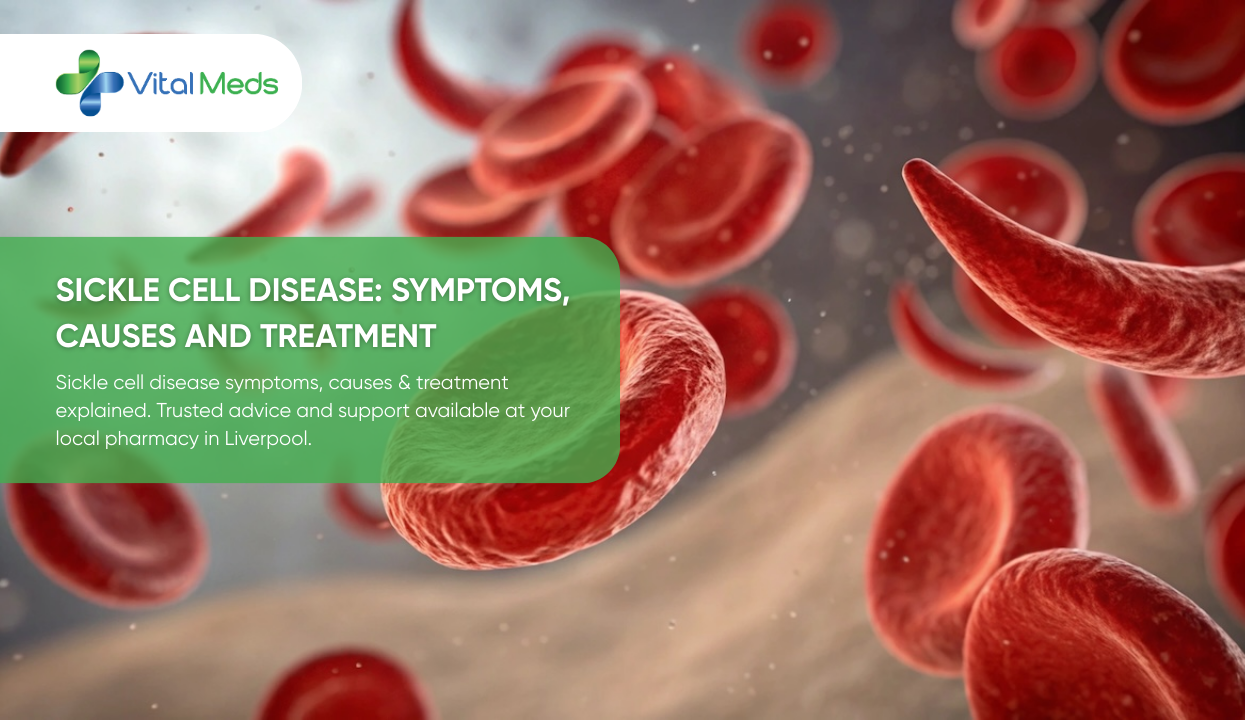
Sickle cell disease (SCD) is a genetic blood disease, which alters the structure and functioning of red blood cells. Sickle cells are rigid and crescent-shaped unlike healthy red blood cells that are round and flexible. The resulting abnormal shape may result in the blockage of blood vessels, triggering pain, fatigue, the damage of organs, and other severe health issues.
Approximately thousands of individuals in the UK live with SCD, and the early detection and effective management is the key to the quality of life. Patients, their caregivers and families require proper guidance with clearly defined symptoms, causes, and treatment options, and local healthcare providers along with pharmacies should support this in Liverpool. This paper offers an extensive summary of SCD, its effects and how it can be effectively dealt with.
What is Sickle Cell Disease?
Sickle cell disease is a genetic disorder that is brought about by a mutation of the hemoglobin gene that forms the protein that carries oxygen in the blood. The presence of hemoglobin S in the body of SCD sufferers makes the red blood cells assume a crescent shape. These are sickle cells that do not last long compared to the normal red blood cells and hence result in anemia and lack of enough supply of oxygen to the body tissue.
SCD is hereditary, that is, the disorder is transmitted between parents and children by genes. To have SCD, both the parents should have the sickle cell gene. It is more common among people of African, Caribbean, Mediterranean, and Middle Eastern origin.
SCD is a disease that involves not only blood but general health. It may also affect the functioning of the organs, retard growth and undermine the immune system making early awareness and proper management extremely important.
Symptoms of Sickle Cell Disease
The SCD symptoms may occasionally be mild and severe and may manifest themselves in early childhood. Common symptoms include:
- Fatigue and Weakness: This is due to anemia that results due to the immediate destruction of the sickle cells resulting in constant fatigue resulting in difficulty in performing daily tasks.
- Pain Crises: Sudden outbursts of intense pain are also one of the characteristic manifestations of SCD. These tragedies are witnessed when sickle cells obstruct blood circulation and they are usually in the chest, abdomen, joints, and bones. The stress, infections, dehydration, or extreme temperature may induce a pain crisis.
- Swelling of Hands and Feet: Stagnant flow of blood in small blood vessels may result in the swellings of the hands and feet, which frequently is among the initial signs of SCD in children.
- Frequent Infections: SCD impacts the spleen weakening its capacity to combat infections. Preventive antibiotics and vaccines might be needed by patients to remain healthy.
- Delayed Growth and Puberty: A lack of oxygen in tissues may result in slowed physical development resulting in retarded growth and puberty in youngsters and adolescents.
- Vision Problems: Sickle cell disease may result in blocked blood-vessels in the eyes resulting in retinopathy or vision disability with time.
Early detection of these symptoms enables patients and their caregivers to seek medical care in good time and deal with complications in a better way.
Causes of Sickle Cell Disease
SCD is a mutation in the HBB gene, the one that influences the hemoglobin production. Hemoglobin transports oxygen to every corner of the body and the mutation leads to sickly-shaped red blood cells which are not bendable and are easily destroyed.
Types of SCD
- HbSS (Sickle Cell Anemia): This is of the most severe type, where both genes that carry hemoglobin are affected by the sickle mutation.
- HbSC Disease: This is whereby there is one gene on the sickle mutation and the other on hemoglobin C. The disease is less severe.
- HbS Beta-Thalassemia: This is the case when one of the genes is carrying the sickle mutation and the other one is carrying the beta-thalassemia gene. The degree is different with the combination.
Risk Factors
- Family history of SCD
- Ethnicity (increased in African, Caribbean, Mediterranean, and Middle Eastern people)
Through genetic counseling, families will be educated on the likelihood of transmitting SCD to their children, hence enabling them to make decisions that they can use with respect to family planning.
Complications of Sickle Cell Disease
SCD may lead to severe multimedia organ complications:
- Stroke: Obstruction of blood to the brain poses the danger of stroke and this is more common in children.
- Organ Damage: The spleen, liver and kidneys may be damaged in the long run due to limited blood supply.
- Pulmonary Hypertension: When the blood pressure in the arteries of the lungs is high, it is likely to cause difficulty in breathing.
- Leg Ulcers: The condition of poor circulation can lead to chronic ulcers or sores on legs.
- Eye Problems: Retinopathy may cause loss of vision when not checked on a regular basis.
These risks should be minimized and life expectancy should be increased through proper management and early intervention.
Diagnosis
Early diagnosis is relevant in controlling SCD. The primary methods of diagnosis are:
- Newborn Screening: In the UK, SCD is identified at birth through regular screening so that it can be treated early.
- Blood Tests: Hemoglobin electrophoresis determines the types of abnormal hemoglobin and ensures the existence of SCD.
- Genetic Testing: Determines the carriers of the sickle cell gene, and this enables the family to be aware of the possible dangers.
Timely interventions, preventive care, and improved long-term health are done through early diagnosis.
Treatment Options
Although SCD has no universal cure, a number of treatment interventions can be used to control the symptoms and complications.
Medications
Hydroxyurea assists in the prevention of any crisis of pain and the necessity of blood transfusion. The pain during these episodes is managed by use of pain relievers whether over-the-counter or prescription. The prevention of infections is paramount particularly to those children who have a weak spleen hence the use of antibiotics and vaccines. Combined, these interventions comprise the fundamental therapy of sickle cell disease, enhancing the health and life quality of patients.
Blood Transfusions
Ischemic stroke and vital anemia (especially in high-risk patients and children) may be prevented with regular blood transfusion.
Bone Marrow / Stem Cell Transplant
It is the only possible treatment to date of SCD, which is only applicable to a few patients with compatible donors. Although not prevalent, transplants have proven to be successful in few instances.
Lifestyle Management
- Always keep hydrated in order to avoid dehydration.
- Avoid extreme temperatures
- Eat well with a lot of vitamins and minerals.
- Manage stress effectively
Local pharmacies, which operate in Liverpool, offer advice on the use of medications, preventive health care, and changes to their lifestyles and assist the patients to stick to their treatment plans.
Living with Sickle Cell Disease
Living with SCD requires daily attention to health and lifestyle choices. Patients are encouraged to:
- Follow prescribed medications diligently
- Recognize early signs of pain crises or infections
- Maintain a balanced diet and regular exercise routine
- Seek support from family, healthcare providers, and local pharmacies
- Join support groups to access emotional and social support
Education and awareness empower patients to manage their condition proactively and maintain a higher quality of life.
Role of Pharmacies in SCD Management
Pharmacies play an essential role in supporting SCD patients:
- Medication Supply: Ensuring patients have access to hydroxyurea, pain medications, and other treatments.
- Patient Counseling: Offering guidance on correct usage, side effects, and adherence strategies.
- Preventive Care: Advising on vaccines and infection prevention.
- Local Support: Providing information about NHS services, support groups, and local resources in Liverpool.
By collaborating with pharmacies, patients can better manage their condition, reduce hospital visits, and improve overall health outcomes.
Preventive Measures & Tips
Although SCD cannot be prevented, patients can minimize complications through simple lifestyle measures:
- Drink plenty of water to stay hydrated
- Avoid extreme temperatures and sudden weather changes
- Practice good hygiene to reduce infection risk
- Attend regular medical check-ups
- Follow vaccination schedules as recommended by healthcare providers
- Consider genetic counseling for family planning
Proactive care can significantly reduce the severity of complications and improve daily functioning.
Support & Resources in Liverpool
Residents in Liverpool have access to:
- NHS clinics specializing in SCD management
- Community pharmacies offering medication counseling and support
- Local support groups for patients and families
These resources ensure that patients have both medical and practical support available within their community.
Conclusion
Sickle cell disease is a lifelong condition that requires careful management, awareness, and support. While the disease poses challenges, early diagnosis, proper treatment, and lifestyle adjustments enable patients to lead fulfilling lives.
Local pharmacy in Liverpool play a vital role in providing medications, guidance, and support. By staying informed, adhering to treatment plans, and seeking help from healthcare professionals and community resources, patients can manage SCD effectively and reduce complications.
With education, proactive care, and community support, individuals living with sickle cell disease can achieve better health outcomes and maintain an active, productive life.
FAQs About Sickle Cell Disease
Can sickle cell disease be cured?
Currently, the only potential cure for sickle cell disease is a bone marrow or stem cell transplant, but it is suitable only for select patients with compatible donors. Most patients manage the condition with medications, lifestyle changes, and regular medical care.
How is sickle cell disease inherited?
Sickle cell disease is inherited genetically, meaning a child must receive the sickle cell gene from both parents to develop the condition. Carriers with only one gene typically do not show severe symptoms but can pass it to their children.
What triggers pain crises?
Pain crises occur when sickle-shaped cells block blood flow in vessels, and common triggers include dehydration, infections, extreme temperatures, or physical and emotional stress. Managing triggers and staying hydrated can reduce the frequency of crises.
Can patients lead a normal life?
With proper treatment, preventive care, and lifestyle management, patients with sickle cell disease can lead active and productive lives. Regular medical check-ups and adherence to medications help maintain overall health.
How can pharmacies help in SCD management?
Pharmacies provide essential support by supplying medications, offering guidance on proper usage, and advising on preventive care like vaccines. Local pharmacies in Liverpool also connect patients with additional healthcare resources and support networks.

