

- Your cart is empty
- Continue Shopping
Cough of Blood: Causes, Treatment and Pharmacy Advice
- PHARMACY FIRST
- Posted on
-
by Gulfam
- 0 comments
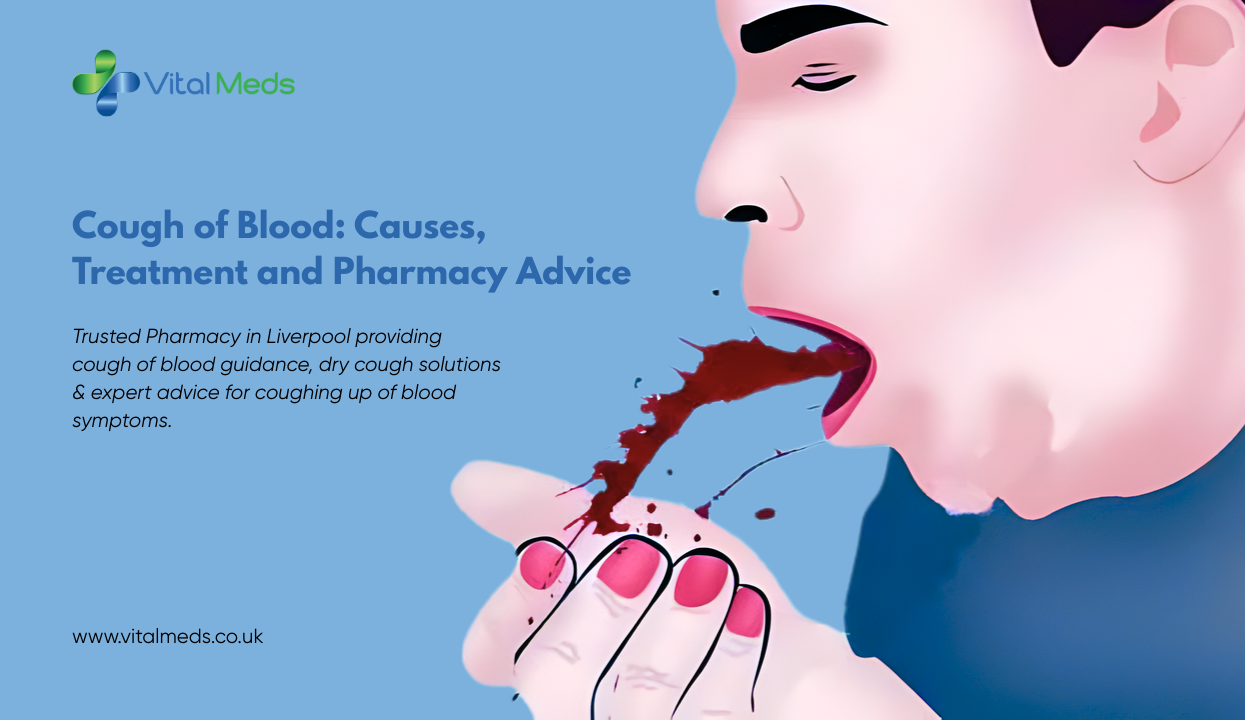
Hemoptysis, or Cough of Blood, is a symptom that brings about panic and fear. Although in some cases it can be caused by some trivial problems such as irritation of the throat, it can also be the sign of some severe underlying health problems, such as pneumonia or any other respiratory illness. It is necessary to learn the causes, symptoms, and potential treatments to be able to intervene and provide appropriate care in time.
We have professional advice at the vital Med Pharmacy in Liverpool on how to deal with cough of blood, safe over the counter dry cough treatments and how to effectively deal with What is Cough of Blood symptoms. This article is expected to educate patients about the condition, when medical care is needed, and how pharmacies can help to control minor respiratory problems without any complications.
What is Cough of Blood?
Cough of blood is when an individual coughs out blood. The quantity of blood can be slight streaks in mucus to a lot of bleeding and one should be aware of the severity. Hemoptysis is not a disorder but a symptom of another disorder, which is more or less mild infection, or the serious health issues such as tuberculosis or lung cancer.
The symptoms that are usually related with cough of blood include:
- Blood streaks in sputum
- Persistent coughing
- The chest pain or tightness.
- Severe cases include shortness of breath.
It is important that it is recognized and treated early. Liverpool has a reputable pharmacy that can give advice on minor cases and assist the patients in determining when to seek medical attention.
Common Causes of Cough of Blood
Expectoration of blood may be as a result of different causes. These causes can be understood and this may be relevant towards controlling the condition.
1. Respiratory Infections
Small quantities of bleeding may be caused by mild or severe infections of the respiratory tract: bronchitis, pneumonia or throat infections. Hemoptysis may also come with other symptoms in such instances like fever, chest pain or persistent cough. In order to avoid complications, early diagnosis and treatment are necessary.
2. Chronic Lung Conditions
Tuberculosis (TB), chronic bronchitis, and chronic obstructive pulmonary disease (COPD) are some of the chronic conditions that cause coughing up blood. These patients are known to have long-lasting coughing and sometimes blood in the sputum. The symptoms should be observed and a visit to the doctor should be made.
3. Injury or Trauma
Hemoptysis can be caused by physical damage of the chest area, inhalation by accident of foreign objects, or damage to airways. Although minor bleeding can be treated by time, extreme trauma cannot be treated without medical attention.
4. Serious Health Conditions
Other more serious causes of cough of blood are lung cancer, pulmonary embolism or vascular malformations of the lungs. These conditions are frequently to be urgently medically examined, and evaluated with imaging tests and specialized treatment. Early diagnosis is essential in terms of successful treatment and better prognosis.
When to See a Doctor
It is not always harmless when one coughs up blood. The medical attention is necessary in case:
- The quantity of blood is a great deal or lasting.
- With chest pain, dizziness, or dyspnea.
- The appearance of blood is repeated in several days.
In Vital Meds Pharmacy, Liverpool, we ensure that we focus on the need to seek the services of a healthcare professional whenever coughing up starts. Although the pharmacy may provide the necessary advice in the case of minor symptoms, constant or severe bleeding should always be evaluated by a specialist.
Dry Cough vs Cough of Blood
A dry cough should be distinguished by cough of blood.
- Dry cough: It is an irritating cough, which does not cause any phlegm or blood. It is frequently provoked by irritation of the throat, allergies or light respiratory infections. Symptoms can be relieved by purchasing over-the-counter remedies of dry cough in the pharmacies.
- Cough of blood: It means that there is some bleeding in the respiratory tract, and that can be a sign of a severe underlying condition. It needs to be addressed by a doctor at once and not by home treatments and over-the-counter drugs.
Knowledge of this difference assists patients to act accordingly and avoid complications.
Pharmacy Advice for Managing Cough of Blood
Pharmacies are important in helping patients with mild symptoms and offer safe over-the-counter treatments whereas serious cases necessitate the involvement of a doctor.
Symptom Guidance
Pharmacists can consult on the severity of the symptoms, the cause of coughing blood and when to visit a doctor.
Dry Cough Solutions
Pharmacies have available cough syrups, lozenges, and inhalers to relieve irritation due to minor infections or dry cough. These are the solutions that can relax the throat and decrease cough frequency.
Medication Safety
Pharmacies also provide information to the patient on how to use OTC medicines safely such as dosage, possible interactions and precautions to take.
Preventive Measures
Pharmacists recommend prevention of irritants, adequate hydration, and lifestyle interventions to eliminate the risk of cough worsening or additional complications.
At-Home Care Tips
Besides pharmacy advice, the patient may take simple precautions in the house that can help him/her cope with minor coughs:
- Stay hydrated:Water can be used to thin mucus and calmulates swollen airways.
- Humidify your environment: Wet air may help dry and irritate your throat.
- Rest adequately:Benefits the immune system to ensure improved recovery.
- Avoid irritants:Smoke, dust and chemicals may exacerbate the symptoms of cough.
Notes: Home care is used together with professional consultation, but coughing blood cannot be overlooked.
Why Choose a Local Pharmacy in Liverpool
A visit to a reliable Pharmacy in Liverpool has the following benefits:
- Expert guidance: Advice on how to deal with coughs and minor respiratory conditions of the professional.
- Safe OTC medicines: Availability of dry cough syrups, lozenges and inhalers.
- Immediate support: Urgent advice about minor symptoms.
- Personalized care: Advice from personal health conditions.
Vital Meds Pharmacy needs online support and local knowledge to leverage and ensure ease and safety in managing health.
Preventive Measures for Respiratory Health
- Vaccinations: Pneumonia and flu vaccinations help to prevent respiratory illnesses.
- Quit smoking: Smoking aggravates irritation of lungs and chronic coughing.
- Regular check-ups: It is important to identify such diseases as TB or lung cancer at the earliest stage.
- Healthy lifestyle: Eating, exercise, and hydration will benefit the lung and health in general.
Conclusion
Coughing up blood is a serious symptom that should never be ignored. While minor cases may arise from simple infections, persistent or heavy hemoptysis may indicate severe underlying conditions. Combining professional medical advice with pharmacy support ensures safe management.
At Vital Meds Pharmacy in Liverpool, patients can access dry cough solutions, expert guidance, and immediate advice for cough of blood symptoms. Prioritize your health, act promptly, and consult trusted healthcare professionals whenever necessary.
FAQs About Cough of Blood
Is coughing blood always dangerous?
Coughing blood can sometimes result from minor infections or throat irritation, but repeated or large amounts may indicate serious conditions like lung infection or cancer. Immediate medical evaluation is recommended for persistent symptoms.
Can a dry cough lead to coughing blood?
A severe and prolonged dry cough can irritate the airways, occasionally causing small amounts of blood. Persistent bleeding should always be assessed by a doctor to rule out serious health issues.
What medicines help?
Over-the-counter dry cough solutions can relieve throat irritation and coughing discomfort, but actual hemoptysis requires professional medical supervision. Pharmacists can guide safe use of OTC medicines for minor symptoms.
Can a pharmacy treat coughing up blood?
Pharmacies provide expert advice, symptom management, and safe OTC options for minor coughs, but serious or persistent coughing up of blood should always be referred to a doctor.
When should I visit a pharmacy vs a doctor?
Minor irritation or dry cough can be managed at a pharmacy with OTC solutions, while persistent, heavy, or repeated coughing up of blood requires immediate medical attention.

